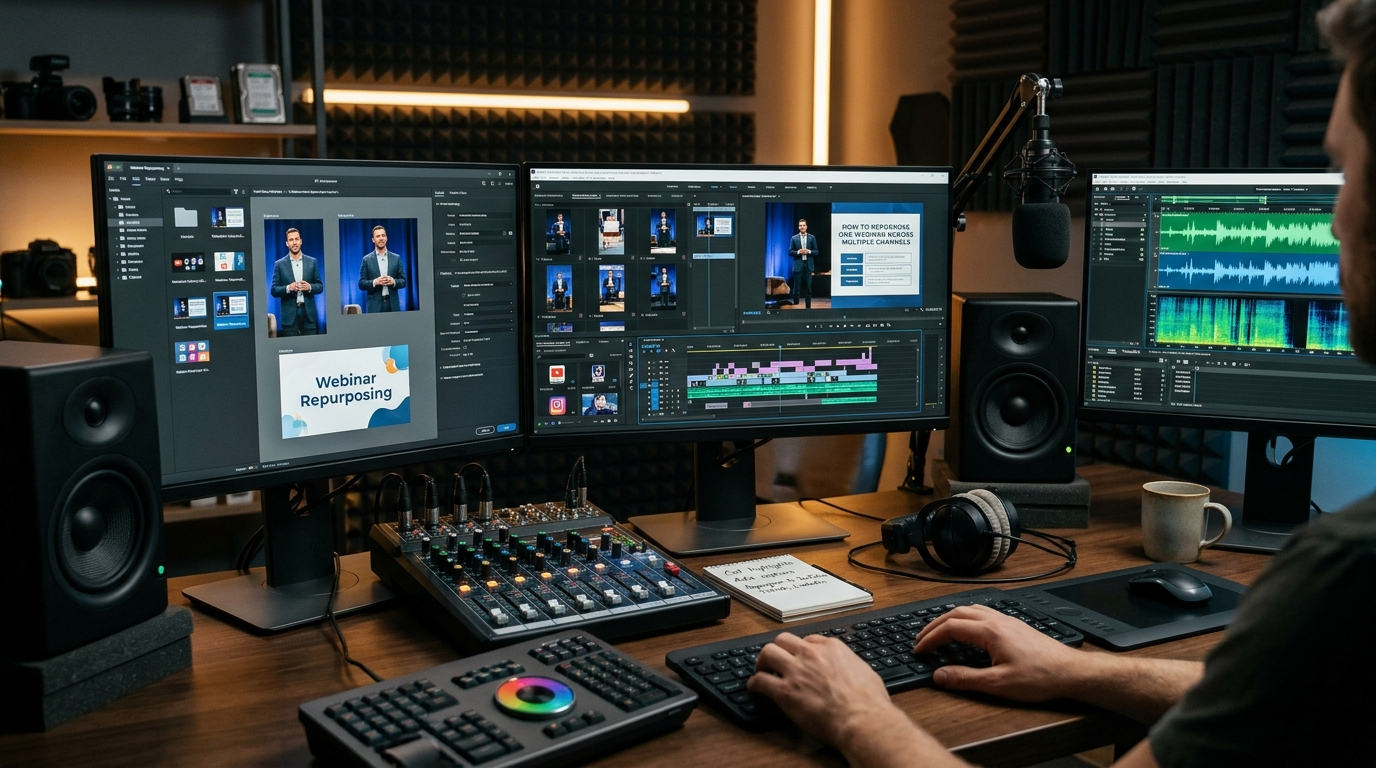
A good webinar contains several kinds of value: explanations, demonstrations, objections, examples and questions. Repurposing works when each output is edited for its audience rather than sliced mechanically.
Inventory what was actually valuable
Review the recording for useful ideas, participant questions, demos and clear teaching moments. A 45-minute reporting session might contain a five-minute explanation of attribution limits. Do not assume every slide deserves a social post.
Confirm rights and permissions first
Check speaker approvals, customer mentions, proprietary visuals and audience privacy. Remove identifying chat questions unless participants agreed to publication. A recording is not automatically safe to publish just because an event was public.
Define distinct channel jobs
Choose a reference article for depth, a clip for one insight, email for a follow-up, and sales notes for objection handling. A short clip can answer why an event count differs from a lead count. Do not force identical captions and framing across platforms.
Edit the long-form resource for reading
Reorder explanations, clean up spoken repetition and add definitions when visual context is missing. A tutorial derived from a demo should include the actual workflow in written form. Raw transcripts often contain incomplete sentences and references to unseen slides.
Cut clips around complete ideas
A speaker's recommendation may apply only to low-traffic sites; keep that constraint in the clip. Include the question, the answer, and necessary qualifications without misleading cropping. An isolated quote can reverse the speaker's intended meaning.
Use questions to guide follow-up content
Turn repeated audience questions into a focused explainer or decision checklist. If attendees ask about migration risks, publish a practical pre-migration worksheet. Avoid manufacturing FAQs unrelated to the actual session.
Build a modest distribution schedule
Sequence content so each piece adds context without exhausting subscribers. Publish the long resource first, then one useful clip and a supporting email. Flooding every channel with the same webinar for weeks creates fatigue.
Keep metadata specific
Give every derivative asset an accurate title, summary, alt text and clear context. An article about GA4 debugging should not use a generic webinar recap title. Overpromising a secret tactic attracts the wrong readers.
Evaluate the whole content system
Assess engaged visits, qualified requests, questions answered and sales-team reuse. A downloadable checklist may contribute to a later meeting without receiving last-click credit. Do not double-count the same audience across all channels as new reach.
Apply this guide
Identify one substantive webinar question. Create a short article outline, a concise email summary and two social excerpts, each pointing to the full explanation without making new claims.
Documentation and next reading
Official and primary documentation worth checking for current behavior, requirements and limitations: